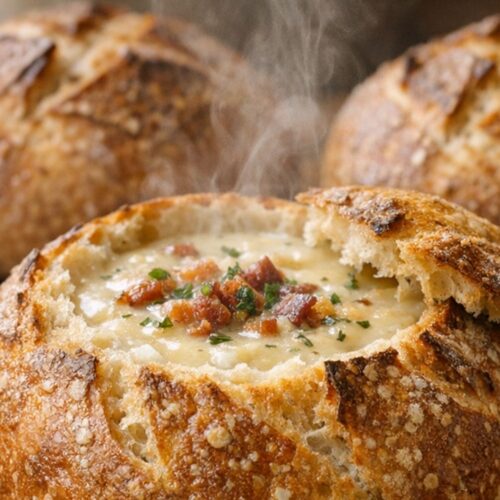
sourdough bread bowls easy and delicious step by step method
These sourdough bread bowls have a crisp golden crust and a soft chewy center that is perfect for holding hot soup or stew. The dough uses active sourdough starter for deep flavor and a simple schedule that fits into a normal day. Serve these bread bowls with broccoli cheddar soup tomato basil soup or hearty chili for a cozy cafe style meal at home.
Equipment
- Large mixing bowl
- Kitchen scale or measuring cups and spoons
- Dough scraper or bench scraper
- Clean kitchen towel or plastic cover
- Baking sheet
- Parchment paper or silicone baking mat
- Sharp knife or bread lame for scoring
- Wire cooling rack
- Oven
Ingredients
- four cups bread flour about five hundred grams
- one cup active sourdough starter about two hundred grams at room temperature
- two cups warm water about four hundred eighty milliliters
- two and one half teaspoons fine sea salt about twelve grams
- one tablespoon olive oil optional for a softer crust
- one tablespoon honey or sugar optional for gentle sweetness and browning
- up to one cup whole wheat flour replacing the same amount of bread flour
- one to two teaspoons dried herbs such as rosemary thyme or Italian style blend
- one small handful grated hard cheese optional
- one teaspoon garlic powder or roasted minced garlic optional
Instructions
- Feed your sourdough starter several hours before you plan to mix the dough so that it becomes bubbly doubles in volume and smells pleasantly tangy
- In a large mixing bowl stir the warm water and active sourdough starter together until the starter is mostly dissolved
- Add the bread flour to the bowl and mix with your hand or a sturdy spoon until no dry patches of flour remain. The dough will look rough and shaggy. Cover the bowl and let it rest for about thirty minutes
- After the rest sprinkle the salt over the dough. Add the olive oil and honey or sugar if you are using them. With a slightly wet hand pinch and fold the dough until the salt and other ingredients are well mixed. The dough should start to feel smoother
- Begin the first part of bulk fermentation. Over the next two hours complete three or four sets of stretch and folds about thirty minutes apart. To do this slide your hand under one side of the dough lift it up and fold it over the center. Turn the bowl and repeat from the other sides until you have folded the dough all around
- After the last set of folds cover the bowl and let the dough rise at room temperature until it increases in volume by about half to three quarters. Depending on your kitchen this usually takes another one to three hours. The dough should look puffed with small bubbles around the edges and feel airy when you gently lift the bowl
- Lightly flour your work surface. Turn the dough out gently so that you do not deflate it completely. Use a dough scraper or knife to divide the dough into four equal pieces
- Shape each piece into a loose round by tucking the edges under. Let these rounds rest on the counter for about twenty minutes. This rest makes the dough easier to shape tightly later
- For final shaping flip one round so the smooth side is down. Gently stretch one edge up and over toward the center and repeat from several directions to create surface tension. Flip the dough so the smooth side faces up and use your hands to drag it toward you in small motions so the top becomes tight and round. Repeat with the remaining pieces
- Place the shaped rounds on a parchment lined baking sheet leaving space between each one. Cover them lightly with a kitchen towel and let them proof at room temperature until puffy and lighter. This final rise usually takes one to two hours. The dough should slowly spring back when pressed lightly with a fingertip
- Alternatively for more flavor and flexible timing cover the shaped dough and refrigerate it for eight to twelve hours. You can bake the sourdough bread bowls directly from the refrigerator
- About forty minutes before baking preheat your oven to about four hundred fifty degrees Fahrenheit or about two hundred thirty degrees Celsius. If you have a baking stone or steel place it on the middle rack. You can also place a sturdy empty pan on a lower rack to create steam later
- When the oven is hot uncover the dough. If you like you can brush the tops lightly with olive oil or plant based milk for a gentle shine. Use a very sharp knife or bread lame to score each round with a simple cross pattern on top. This helps the bread expand evenly in the oven
- Place the baking sheet on the hot stone or rack. For extra steam carefully pour a cup of hot water into the empty pan on the lower rack and close the oven door quickly
- Bake the sourdough bread bowls for about twenty five to thirty minutes until they are well risen and deep golden brown. They should sound hollow when tapped on the bottom. If needed bake for a few more minutes to reach your preferred crust color
- Transfer the baked bread bowls to a wire rack and let them cool completely. Cooling allows the crumb to set so the bowls stay strong when filled with hot soup
- To turn each loaf into a bowl use a small serrated knife to cut a circle from the top. Lift off the top and gently pull out some of the soft interior while leaving thick walls and a solid base. Save the extra bread pieces for dipping
- Fill the sourdough bread bowls with hot soup such as broccoli cheddar soup creamy potato soup or tomato basil soup and serve right away
Notes
You can paste this into the Notes area and then turn some phrases into internal or outbound links as needed
Sourdough bread bowls are perfect for rich soups such as creamy broccoli cheddar soup or hearty chili. For step by step help with maintaining your starter you can link to your own easy sourdough starter guide on this site. For a lighter meal pair these bowls with a vegetable based soup that is thick enough to sit nicely inside the bread.
If you want to learn more about sourdough fermentation you can add an outbound link here to a trusted baking education site such as a well known flour company. For food safety information about cooling and reheating soup you can add a link to an official public health site.
The dough can be shaped and refrigerated overnight after the first rise which gives you fresh sourdough bread bowls the next day with very little active work.
Suggested image alt text for this recipe card
Use these lines when you upload images for the recipe so your keyphrase appears in the alt attributes
Fresh sourdough bread bowls filled with broccoli cheddar soup on a wooden board